
Dictionary · P
Proof of stake
also: PoS, proof-of-stake consensus
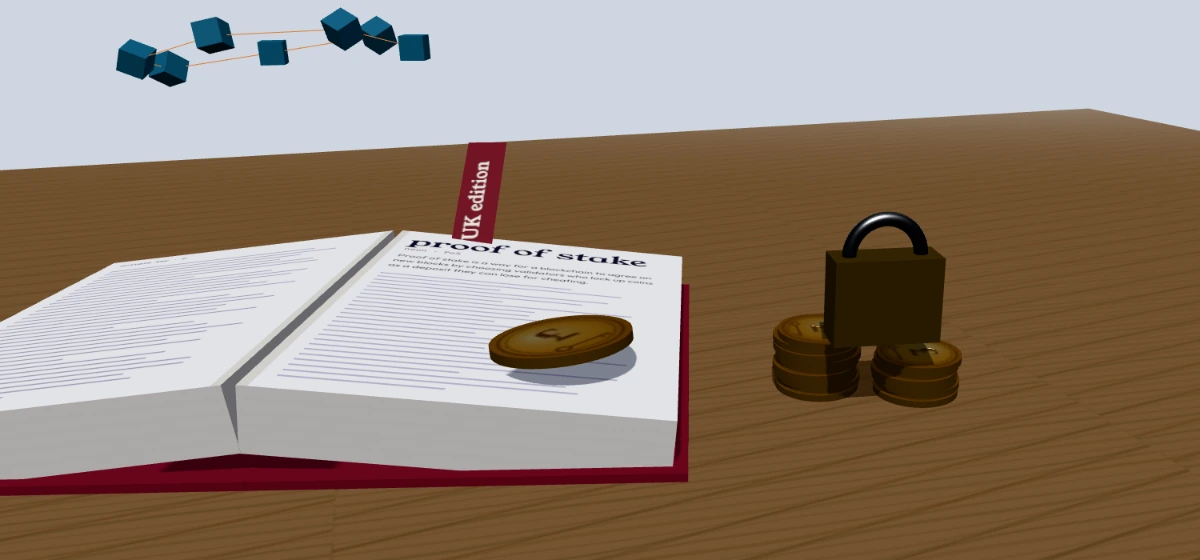
Proof of stake is a way for a blockchain to agree on new blocks by choosing validators who lock up coins as a deposit they can lose for cheating.
Rules checked against GOV.UK, the FCA and legislation.gov.uk on 17 November 2026. How entries are checked
Who decides the next block if nobody is mining?
Instead of racing to solve a puzzle, validators put coins at stake. The network picks who proposes the next block, broadly in proportion to how much each has locked up, and other validators check and vote on it. Approve a fraudulent block or go offline at the wrong moment and part of the deposit can be cut away, a penalty known as slashing.
Because no one is burning electricity on guesswork, proof of stake uses a small fraction of the energy that proof of work does. Ethereum, the second-largest network, switched from proof of work to proof of stake in September 2022. Critics point out a different trade-off: whoever holds the most coins has the most say.
Most holders never run a validator themselves. They take part through staking, either by delegating coins to a validator or by letting a platform stake on their behalf, which brings its own lock-up periods and custody risks.
Hannah has tokens worth £1,200 on a proof-of-stake network and delegates them to a validator from her wallet. Over a year she receives rewards worth £54, each valued in pounds on the day it arrives. On some networks, if her chosen validator is slashed for misbehaving, part of her own stake is cut too, so the validator's record matters as much as the advertised reward.
Not the same as Proof of work: Proof of work makes block producers spend electricity to earn the right; proof of stake makes them lock up coins they can lose.
| Proof of stake | Proof of work | |
|---|---|---|
| How block producers are picked | By the coins they lock up | By the computing work they do |
| What makes cheating costly | Part of the deposit can be slashed | Redoing the work costs electricity and hardware |
| Energy use | A small fraction of proof of work's | High: every guess uses electricity |
| Usual criticism | The biggest holders have the most say | The energy it burns |
We describe how proof of stake works; nothing here is a view on which network or validator you should use.
What catches people out when they delegate coins?
- Some networks lock staked coins for days or weeks before you can withdraw them; check before committing money you might need.
- A firm promising a fixed, high 'staking' return is not the same thing as the network's reward; check it on the FCA Register and Warning List.
Questions people type about proof of stake
is proof of stake better than proof of work
Neither is simply better. Proof of stake uses far less energy; proof of work has a longer track record and doesn't hand influence to the largest holders.
what happens if a validator cheats
The network can slash its stake, destroying part of the deposit, and may remove it from the validator set.