Dictionary · R
Rug pull
also: exit scam, rugged, rugpull
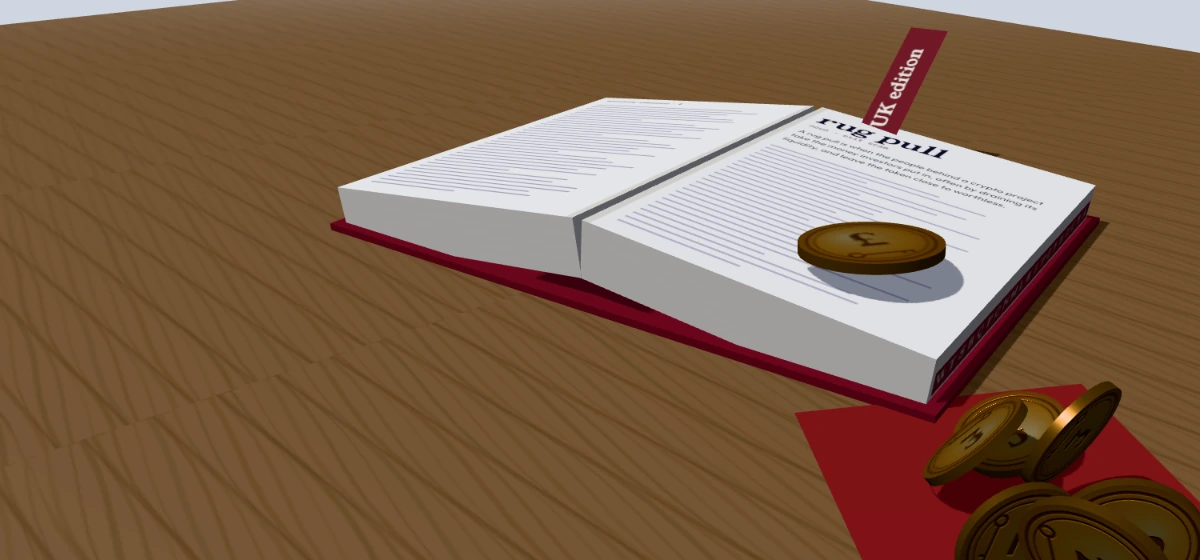
A rug pull is when the people behind a crypto project take the money investors put in, often by draining its liquidity, and leave the token close to worthless.
Rules checked against GOV.UK, the FCA and legislation.gov.uk on 17 November 2026. How entries are checked
How do the developers actually take the money?
The classic version is simple. A team launches a token, pairs it with a more established coin in a liquidity pool, hypes it on social media and then withdraws the established coin from the pool. Holders are left with a token nobody can swap out of. Other versions hide a function that lets the team mint billions of new tokens, or code that lets people pay in but blocks them from selling (a 'honeypot'). A 'slow rug' is a team quietly selling its own large allocation over weeks.
Looking back, the signs are usually there: an anonymous team, liquidity that isn't locked, most of the supply sitting in a handful of wallets, and pressure to get in before a deadline. The FCA's own checklist asks whether you were contacted out of the blue, pressured to invest quickly or promised returns that sound unrealistic.
Rug pulls are only one kind of crypto scam. In the UK, a large share of losses comes from fake investment platforms promoted on messaging apps and from adverts using fake celebrity endorsements. After any of them, expect a second approach from someone offering to get your money back for a fee.
Dan puts £250 into a new meme token after a video promises it will '100x'. Three days later the developers remove the coins backing the pool, the token's price drops more than 99% in minutes and Dan's holding is worth under £2. The project's website and social accounts disappear the same afternoon.
Not the same as Pump and dump (market manipulation): In a pump and dump, promoters hype a token and sell into the crowd they drew in; in a rug pull, the project's own team takes the money or liquidity directly.
| Rug pull | Pump and dump | Recovery scam | |
|---|---|---|---|
| Who takes the money | The project's own team | Promoters selling into the crowd | A so-called recovery expert |
| How it works | Drains liquidity or mints new tokens | Hype a token, then sell as buyers arrive | Charges an upfront fee to 'recover' losses |
| Typical warning sign | Unlocked liquidity, anonymous team | A set time to buy in | Contact after you've already lost money |
This is a general explainer on rug pulls; if you have lost money, your bank and Report Fraud or Police Scotland can act on your case in a way we can't.
What should you do, and avoid, after losing money to a rug pull?
- If you paid by card or bank transfer, contact your bank straight away.
- Anyone offering to recover lost crypto for an upfront fee is almost certainly running a second scam; the FCA warns about these recovery offers and says it cannot get your money back.
- Before putting money into a new token, check whether its liquidity is locked and who can mint more. If you can't find out, treat that as the answer.
Questions people type about rug pull
is rug pulling illegal uk
Taking people's money by deceiving them can be fraud, which you report to Report Fraud or Police Scotland. Whether a particular rug pull is a crime depends on the facts.
do rug pulls ever recover
Very rarely. Once the backing liquidity has gone, there is usually nothing left to recover, and 'recovery experts' who say otherwise are a known scam.